What is tachograph analysis

What is tachograph analysis? All you need to know

What is tachograph analysis?

Tachograph analysis is the way to measure and monitor how your drivers are performing in their day-to-day driving and work duties. Tachograph analysis provides the transport manager with detailed reports, highlighting areas for attention. By recording speed and distance, the tachograph provides an accurate picture of what a driver has been doing, even whether or not they have broken the law. Since 2006, all vehicles over 3.5 tonnes sold in the UK are required by law to be fitted with a digital tachograph.

Every fleet operator must ensure they have the means to analyse driver data from both the tachograph vehicle unit (VU) and the Driver Card and to manage said data correctly. For information relating to tachographs rules for drivers and operators go here, including exemptions.

There are some old analogue tachographs out there, however, in the post, we’ll be looking at digital tachographs.

How do we collect this data, where do we put it and what do we do with it?

Data is collected via a tachograph Vehicle Unit (VU) and a driver card which is inserted into the VU every time the driver uses the vehicle. The data is then uploaded to tachograph analysis software using a download tool and then, in turn, provided to you via software applications, in written and graph formats. Let’s have a look at all the elements needed to be compliant.

The Tachograph Vehicle Unit (VU)

A tachograph unit (VU) is a radio-sized device fitted on goods and passenger vehicles. The VU head records various types of driver and vehicle data such as journey distance, speed, driving time, working time, and events. Data is stored in the VU internal memory. There are a number of companies out there that manufacture Vehicle Units such as VDO (Siemens), Stoneridge, Intellic and Actia.

To access the VU data, you will need to ‘unlock’ theVU using a company card. Other cards used to unlock data are the control card and the workshop card.

Vehicle Unit data should be downloaded at least 90 )the maximum timeframe) or 28 days, but we recommend more frequent downloads, weekly for drivers and monthly for vehicles as best practice.

The Digital Tachograph 3.0 from VDO

The Digital Tachograph 3.0 from VDO

Control Cards

Control cards are used by law enforcement agencies to retrieve data from the tachograph. A control card is able to override any company lock put in place by operators.

Workshop cards

Workshop cards are used by authorised and official tachograph technicians to calibrate, install or repair tachographs.

Company cards

Company cards are used by operators to retrieve data from the tachograph regarding their employees and vehicles. You can also lock information using a company card or authorise third parties, to collect data.

Driver Card

Unlike cards used to ‘unlock’ data from the VU, the driver card collects data. The driver card is a credit card-sized plastic card that contains a microchip. The card stores all relevant driver data required for EU Drivers’ Hours regulations including break and rest times.

The driver card:

  • Is unique to the individual driver and valid for five years
  • Can store information for 28 days
  • Can only be used by its owner, ie. the driver authorised to use it
  • May be suspended or withdrawn by an enforcement officer if the card has been falsified, if the person using the card is not the legal holder of the card, or if the card has been obtained by false declaration or forged documents
  • Must be made available to enforcement officers on request.
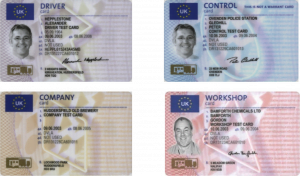
Digital tachograph cards

Download Tool/key/card reader

Download tools are used to collect VU and card data. They come in varying shapes and sizes and offer differing functionality. They all collect data from the vehicle and the driver card. Manufacturers include DigVU, Digidown and Optac. Automatic, remote downloading is also available.
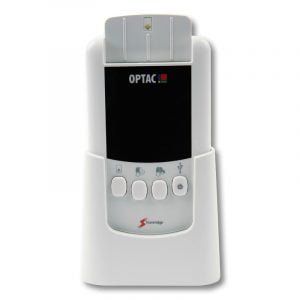
Optac download tool

Optac combined download tool


DigiVU+ Digital Tachograph Reader

DigiVU+ Digital Tachograph Reader

Digital Tachograph Card Reader

Digital Tachograph Card Reader

Analysis software

Tachograph software is a web-based tachograph analysis system, where you can instantly analyse data and manage driver and vehicle reports. You generally will only pay for the records that are submitted. This can keep start-up costs down, scales as your business scales, and means that the product is always up-to-date and will never need to be upgraded. I have used quite a few tachograph systems including over the years, for example, Tachomaster, Descartes Smartcompliance, and Tachodisc. I am currently using TDi Disk Check. In my humble opinion, Disc Check is brilliant, very easy to use, intuitive, and is built with end-users in mind. The system is fully accessible from mobile and desktop devices meaning no limits as to when or where data is accessed.
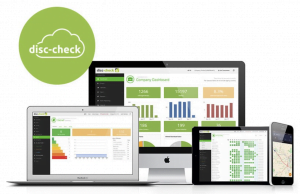
TDI disc-check

TDI disc-check

Go it alone or use a paid service?

This leads us nicely onto whether you should use the services of someone to assist or to go it alone. This will depend on your operation and how your transport department is managed. I’m an ETM and although my employer and I tightly manage analysis reports, using a tachograph specialist just adds an extra level of security and detail providing peace of mind. I use Logistics Support Services. They really know their stuff, provide an excellent support service, and are both reliable and friendly.

Analysis reports

Once you have collated all your data, (driver and vehicle) and you have uploaded it to your software system, you will then be able to view your analysis reports. The system you use will provide you with a number of reports which can be automated. These should include:

  • Drivers’ Hours (infringements)
  • Working Time (infringements)
  • Driver activity
  • Vehicles Driven
  • Missing Mileage
  • Over Speeding
  • Events and Faults – E.G driving without an appropriate card
  • Unknown driver

Most analysis software will have a dashboard to give you an overall view of the analysis and compare how your drivers are performing. From here you can drill down on a report for a more detailed look.
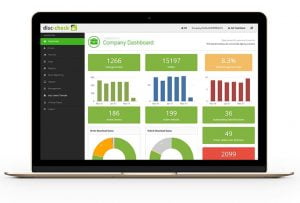
disc-check-dashboard

Working Time

Your analysis software will also provide you with a system to manage working time. By using drivers’ hours from the tacho data you can enter statutory holidays and any other work that is carried out not recorded by the drivers’ card.

Debrief

A debrief system is a configurable points-based system that helps you spot repeat infringements and advise on what corrective measures to take. The debrief system also provides a process for the escalation of disciplinary matters. This is a great way to identify and reduce repeat infringements.

As with the dashboard overview, debrief systems are included with most driver analysis software.

Smart tachographs

Vehicles registered for the first time on or after 15 June 2019 now have to be fitted with the new smart tachograph. The aim is to reduce the administrative burden on the transport industry (covering both HGV and PCV) and to eliminate the most serious forms of tampering or offence.

Smart tachographs include GPS for positioning and vehicle tracking, remote enforcement capabilities and the ability to link the units to vehicle telematics.

TachoSYS digiDL

TachoSYS digiDL for automation

I don’t have any affiliation with TDi Disk Check, I just use Logistics Support Services for their tacho services and think they’re brilliant, so worth a mention. You can reach them here.

TMconsultant provide transport manager help for transport managers. If you would like to know more about any of our services, please don’t hesitate to get in touch. We’re here to share the knowledge!


FORS standard version 5

FORS standard version 5, a simple yet comprehensive guide

FORS standard version 5 is here! This is my simple yet comprehensive guide to the main changes, all in one place.

The new FORS Standard VS5 is the fifth iteration and sets out the requirements operators must meet if they wish to become FORS accredited. The revised edition addresses the need for air quality improvements and sets out requirements to help operators mitigate against threats of terrorism. Provision is also made for a broader range of operations and vehicles, including powered two-wheelers, and new requirements for bus and coach operators.

The FORS Standard is updated every two years to reflect the continuous evolution of best practice and FORS’s aim to drive-up safety, environmental, and efficiency standards for all road transport operations.

Version 5 highlights the increasing diversity of commercial fleets and aims to make it more accessible for a broader range of vehicles to achieve accreditation. It contains a more robust commitment to raising environmental standards in operations, recognising the need for better air quality in UK cities via revised requirements and a revised training programme.

Main changes – Bronze

The main changes make FORS more accessible to more vehicles, especially growing fleets of motorcycles and other powered two-wheelers, which contribute to many deliveries on UK roads. Specific load safety requirements set out by vehicle type are included, not only for heavy goods vehicles, vans and passenger carrying vehicles (PCVs), but also powered two-wheelers as well.

PCVs are also given greater credence, with a new requirement at FORS Bronze to ensure accessibility, comfort and safety for all passengers.  The requirement must be demonstrated via a passenger safety policy, on vehicle signage and adequate access for all passengers.

A new counter terrorism requirement has been introduced, meaning operators must have a policy and supporting procedures in place at FORS Bronze, which names a Counter Terrorism Champion. Under new Bronze training requirements members must also have completed the current FORS Professional Security and Counter Terrorism eLearning module within the 24 months prior to audit.

Main changes Gold & Silver

An added emphasis on improving environmental operating standards becomes evident with a new requirement at FORS Silver for HGV and van drivers to complete the FORS Professional ‘LoCITY – Time to clean up’ eLearning module within the 24 months prior to accreditation.

In line with the progressive nature of the scheme, FORS has also introduced a requirement at Gold for drivers to have completed either the FORS Professional LoCITY Driving training course, or a FORS Approved environmental awareness course within the past five years.  This is in addition to the current requirement to have attended a Safe Urban Driving (SUD), a Van Smart (VS) or a FORS Approved work-related road safety training course, within the five years prior to accreditation.

FORS Silver also includes a commitment to tackle noise pollution – a criteria formally only mandated at FORS Gold.  Operators seeking FORS Silver accreditation must complete noise assessments at operating centres and noise sensitive locations in a bid to minimise noise pollution and its impact on local communities.

The new FORS Standard aims to minimise the probability and severity of collisions involving vulnerable road users.  FORS Silver accreditation is also fully aligned to meet both the TfL requirements on managing work-related road risk (WRRR) and the new CLOCS Standard v3, due to come into force  in January 2019.

Training requirement changes

New training requirements have been introduced across all levels of accreditation for both managers and drivers. These are different for drivers of specific vehicle types so it is best to check the training cards at Annexes 1 (for drivers) and 2 (for managers) of version 5 of the FORS Standard. Transitional provisions are in place for a number of new training requirements. In summary, for managers, and for HGV and van drivers, the new training is as follows:

There are transitional periods for a number of the new training requirements. These are as follows:

N.B Security and Counter Terrorism elearning will count against the new mandatory training requirements for Security and Counter Terrorism as set out in Annex 1 of the FORS Standard. It is now valid for 24 months from the original date undertaken. Therefore the validity will be extended on your training records from 12 months to 24 month

The safety eLearning modules from 14 January 2019 are:

Cycle Safety, Van Smart, Smart Driving and Bridge Smart (due to launch soon). These are valid for 12 months and must be renewed every year. After 14 January 2019, Security and Counter Terrorism will no longer be part of the suite of safety eLearning modules. It has become a separate mandatory eLearning module under Bronze D4 and must be undertaken within the past 24 months.

Summary (annex 5)

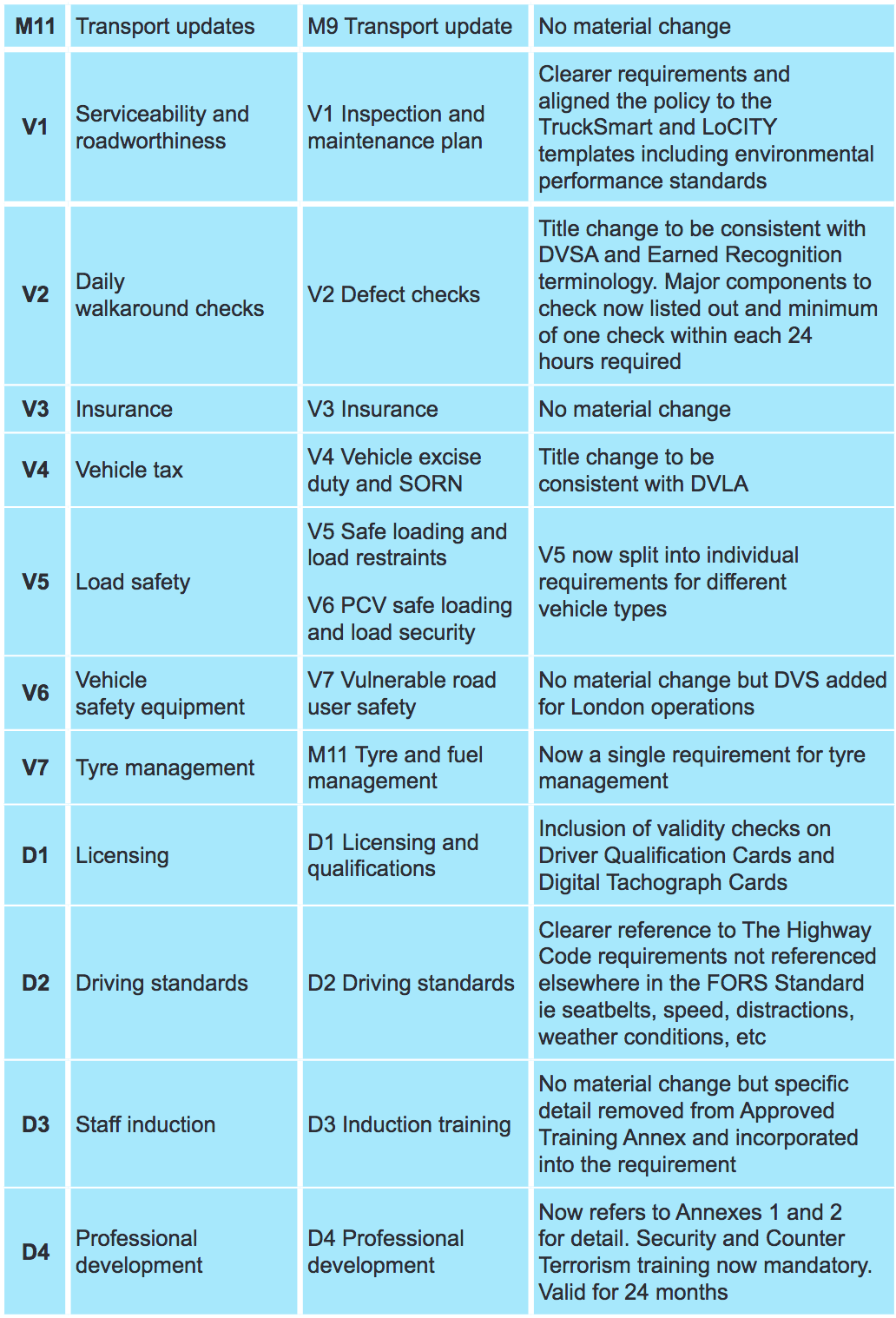
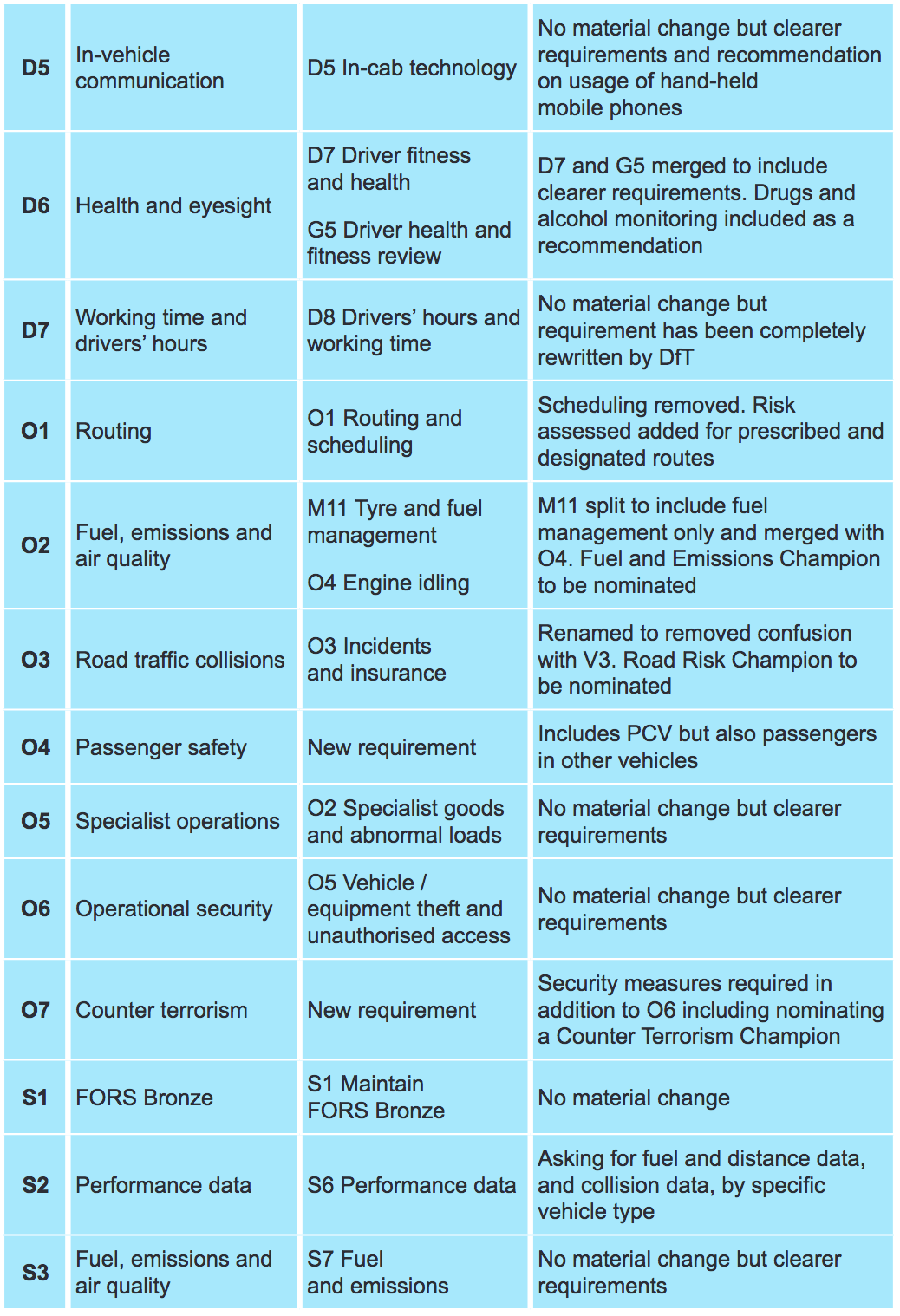
Have a look at all the summary of changes in annex 5 below.

The FORS Standard version 5 is now available to download on the FORS website here and becomes effective from Monday 14 January 2019 for both new and existing operators.

TMconsultant provide a complete FORS Help package providing you with all the requisite document templates and support required to pass your initial bronze audit. If you need advice regarding FORS please do just get in touch. Here to share the knowledge!


Great-ways-to-make-Driver-CPC-training-more-exciting

Great ways to make Driver CPC training more exciting

As Driver CPC trainers we’re always looking for great ways to make Driver CPC training more exciting for drivers. Not only do we need to ensure our delegates are kept engaged and motivated throughout the session, we trainers also need to be motivated as we’re teaching driver CPC day in day out.

Teaching is an art form. Great trainers hold our attention, make us laugh, help us to fully understand complex subject matter and, most of all, inspire us!

Get off to a good start

Kick off by giving a overview of you and brief history of your achievements. What your experience is and why you love teaching. Tell your your attendees what you are going to learn and how those skills will help them achieve their goals. Break down inhibitions by using an ice breaker. For example, you could ask drivers to break up into groups of two, one delegate will tell the other where they are from, who they work for and an interesting nugget of information the class will find funny. Each will tell the rest of the delegates about the other.

Change the room layout

Training rooms tend to be laid out in the same way, rows of tables and chairs. The easiest way is to just rearrange the room into a more interesting layout each time you deliver training.

Your choice of venue can also have an impact on engagement. A space full of light, colour and texture can prove far more inspiring than a bland, windowless meeting room.

Use props

To make your teaching even more visual, add in some real life props. These could be practical items such as old vehicle units, a model of a vehicle, straps, charts etc….anything that will help liven up the proceedings and help people to remember.

Although the nature of Driver CPC training is serious, it is important to remember that people learn best when they are having fun.

Play games

Which leads us nicely on to……games are a brilliant way for people to learn without even realising it. This could be ‘Generation Game’ style tasks, quizzes, puzzles, crosswords, memory games or ordering tasks – anything that focuses the attention. You can even do it against the clock for extra excitement.

Introducing a quick quiz at the end of each content section, helping recap on what’s been learned. You could offer a small prize for the winner!

Accommodate different learning styles

People learn in different ways. Some of us are visual learners, preferring pictures, videos and diagrams, while others respond to spoken and written word, music, logic and reasoning or even physical activities.

Try to vary your teaching by combining traditional linguistic teaching methods, with audio and visual presentations, written handouts, interactive tasks, and group work. This will provide an inclusive environment for all learning styles and ensure no one gets left behind.

Facilitate Engagement in Training

It’s important to create an emotional connection with the learner. Storytelling is great way to facilitate engagement in training. Case studies are a great way to tell a story and show impact.

Tell stories or use metaphors

Try to make it relatable to everyday life by using real examples and case studies or even creative metaphors or parables.

By associating imagery that is left of field to what you are actually teaching, such as comparing driver to a golf club, I think you can see where I went with that. This way you can more easily embed it in your delegates’ memories.

Keep it short

One of the best ways to keep your audience engaged is not overloading them with information. Go on too long and the brain simply shuts off and people stop listening.

As Driver CPC is taking place over the course of a day, schedule in plenty of short breaks. As well as giving attendees a chance to get up, walk around and take refreshment, you should also facilitate ‘downloading’ of learnings.

Give them time to write and organise notes and assist them by providing pens, pads, sticky notes and highlighters etc.

Provide recognition and reward

Training participants will be more motivated to successfully complete the course if their efforts are recognised and they have something to show for it at the end.

Make attendees know they will receive personalised certificates to mark their participation and perhaps also consider extra incentives such as a competition or small prizes for top students. An element of good-natured competition can keep the attention of those attendees with a competitive streak!

Let them teach you

Break into small groups. Assign each group a section of reading material. Have each team write down the major points on a flip chart and do a team presentation to the rest of the class. This exercise really increases energy!

Conclusion

Great ways to make Driver CPC training more exciting is as much about entertaining your delegates as informing them. Make your training lively, varied, fun and unexpected and your participants will learn quicker and better!

If you would like to know more about teaching Driver CPC please do get in touch. Here to share the knowledge!

Transport Manager Duties

Top-line Transport Manager Duties

This list of Top-line Transport Manager Duties is not exhaustive and is intended to be used as a guide only. I have broken the jobs by daily, weekly, monthly, quarterly, and annually.  Many of the jobs are interlinked and will need to be repeated where necessary. For a more detailed breakdown of the TMs duties, we have compiled the definitive transport manager’s compliance pack that contains all the requisite policies and procedures, risk assessments, declarations, and helpful tools, essential in helping you to effectively and continuously manage all transport activities.

Transport Manager Duties

Daily

  • Ensure all drivers have a daily defect report book
  • Ensure 3.5t drivers have a daily working time book. Including drivers who are swapping from EU to GB regs
  • Ensure VU has paper roll inserted and drivers carry a spare
  • Enter all defects are entered into a master defect book or the MS for cross-referencing
  • Ensure all defects are rectified immediately, information has been recorded accurately and signed off – No rolling defects
  • Collect any completed defect report books and working time record books
  • Record any of the below on the Master Spreadsheet (MS)
    • Fines
    • Accidents
    • Incidents
    • Insurance claims
    • Breakdowns
    • Roadside stops
    • Complaints
    • Driver info changes
    • Training
  • Check planner schedule for any vehicle maintenance due dates
  • Ensure any vehicles due for maintenance are booked in with suppliers
  • Carry out pre-employment assessments for new drivers
  • Carry out induction training for any new drivers
  • File any relevant documentation

Weekly

  • Review/cross-reference all defects
  • Check whether part-time or agency drivers have or have not driven for any other company. If yes, they must complete the Agency or part-time driver activity record
  • Check planner for vehicle maintenance
  • Book in vehicles for PMIs, MOTs, Servicing, Brake Tests, Tyre changes
  • Enter fuel and tyre usage on the MS

Monthly

  • Collect Tachograph data and charts from drivers and VUs for analysis
  • Send off data for analysis
  • Make a record of the date sent and when reports are returned using the MS
  • Complete the Tachograph analysis discussion with drivers
    • Cross-reference charts with reports
    • Drivers must justify any infringements in writing on the report
    • Drivers must sign off any infringements and TM countersign
    • Check:
      • Digital Over Speeding – Instances whereby a vehicle has been recorded exceeding the predefined maximum speed limit for HGV/PCV’s. Small instances may indicate a steep descent. Review of any instances that exceed 3 minutes in duration.
      • Events and Faults – Lists all error messages and diagnostic events that the digital tachograph unit within a given vehicle has recorded, such as tampering with the unit, removal of power supply, or mechanical/electrical failure. Review this section in detail.
      • Driving without an Appropriate Card – This error occurs when the VU registers that the vehicle has been moved without a driver, enforcement, or workshop card being in place. In all likelihood, this error is brought about by small movements or shunts. However, they need to be explained where possible
      • Unknown Driver – Indicates in detail every instance whereby a vehicle has recorded itself in motion, without a driver, workshop or enforcement card being inserted. Although most instances will constitute a small shift or shunt, a review of this section in detail and paying close attention to any instance which exceeds 5 minutes in duration is recommended.
    • Record driver infringements on MS. Analyse trends to determine whether a driver needs any further training, reprimands (warning letter)
  • Cross-reference PMI sheets with defect reports and carry out investigations for any discrepancies – Sign off PMI sheets
  • Complete a spot check daily walk round check with drivers to ensure they are doing this properly – provide training where necessary
  • Check with publications and online recourses for new legislation and general information relating to operating vehicles/training
  • Review planner and make any necessary adjustments
  • Book in vehicles for PMIs, MOTs, Servicing, Brake Tests, Tyre changes
  • Carry out monthly driver meetings including a toolbox talk – record each toolbox talk using the training record sheet
  • Carry out relevant driver licence checks
  • Carry out relevant eyesight checks
  • Carry out a monthly review/status meeting all staff involved with transport and with all connected departments

Quarterly

  • Processes review and update policies and processes where necessary

Annually

  • Ensure all vehicles are booked in for Pre MOT and MOT
  • Book drivers in for annual Driver CPC training and or any other required training
  • Carry out an annual review meeting with Directors and connected departments to include policies and processes according to Operator and Driver Handbooks
  • Review and update policies and processes where necessary
  • Directors to sign off updates
  • Communicate policy changes to drivers – Carry out annual review meeting with drivers including any policy updates – drivers to be given new updates with training and driver declaration sign off

For more information regarding the documentation and services we offer and Top-line Transport Manager Duties, please visit the TMconsultant shop or alternatively please just get in touch. If you are looking to become a Transport Manager, have a look at the National Careers Service page for Transport Managers and also a blog I wrote, Looking for an External Transport Manager?

Here to share the knowledge!

JAUPT announced audit 2018

Driver CPC Training – What’s the point?

Driver CPC Training – What’s the point?

Driver CPC Training – What’s the point? Is a question I get asked all the time by drivers. Well, there a many great reasons for Driver CPC Training. I’m now into my 7th year of Driver CPC training and running a Driver CPC Consortium and I’m shocked as to how many professional drivers out there have gaps in their basic ‘need to know’ knowledge. And interestingly, I’m constantly asked “Driver CPC training, what’s the point? Aside from the fact that all HGV drivers should know their EU Drivers Hours, Working Time (RTD), Driver walk round checks & Defect reporting/rectification processes and how to use a Tachograph properly, the fact is many still don’t.

So here’s my eleven reason why taking Driver CPC training can only be beneficial for the professional driver.
  1. It will help to improve your understanding of legislation
  2. It’s always beneficial to undertake refresher training
  3. You may learn something new
  4. It’s a chance to air your grievances
  5. It will help clarify any issues or lack of understanding
  6. It can show how you can work with your employer to help improve working conditions
  7. You can discus the subjects in a open environment and argue your points both positive and negative
  8. It’s a great opportunity to ask questions with a professional Driver CPC trainer and discus with other drivers
  9. Armed with the facts, you can drive/work with confidence – no grey areas
  10. It will help improve your working day through having a better understanding of fuel efficiency, nutrition advice, how to deal with stress, customer service, traffic law and Health & Safety
  11. Any training when driving a large, potentially lethal vehicle can only be beneficial for the driver and the public

Obviously this list isn’t exhaustive but they are the main points. If you disagree or would like to add to the list please feel free, just get in touch!

I can’t think of any reasons why not only taking Driver CPC training is necessary but why you, as a professional driver shouldn’t enjoy your day with like minded individuals. Rather than going into the session with a negative attitude, next time think about how beneficial Driver CPC Training can be for you, your employer and the public!

If you have any questions regarding the above, anything to do with Driver CPC Training or becoming a Driver CPC Consortium please do get in touch, we’re here to share the knowledge!

Driver CPC Consortium, what's the point?

How to Become an External Transport Manager

Perhaps you’re just starting on a new venture, you could already be working in the transport industry, or you’re already a qualified transport manager and looking to transition to an external transport manager. Wherever you are on your career journey, please read on to find out, How to Become an External Transport Manager.

Most Small/Medium Enterprise (SME) operators don’t need to employ the services of a full-time transport manager. They therefore can opt to use a part-time/freelance external transport manager. This is where you come in, but if not already, you will first need to get qualified.

Step 1. Getting Qualified

To become an external transport manager you will first need to obtain a Transport Manager Certificate of Professional Competence (CPC) otherwise known as the Transport Manager CPC or TM CPC. It’s suitable for those wishing to enter the profession of HGV or PCV transport management to demonstrate professional competence to meet Operator Licensing requirements.

The Transport Manager CPC qualification is offered on behalf of the Department for Transport and is assessed at Level 3 competence of the National Qualification Framework.

The type of Transport Manager Certificate of Professional Competence (CPC) exam you need to take depends on which sector you want to work in:

  • Road Haulage – For goods vehicle operators, HGV or van companies
  • Road Passenger Transport – For public service vehicle operators, bus or coach companies

You need to take an exam approved by one of the following organisations:

  • Chartered Institute of Logistics and Transport (CILT)
  • City & Guilds
  • Innovate Awarding
  • National Logistics Training Consortium (NLTC)
  • NOCN Group
  • Skills and Education Group (SEG) Awards

Consider whether you will be working with operators running national and/or international operations. You will need to take an extra exam for international transport management.

Pop Transport Manager CPC into a search engine and find a training provider near you. Most offer options for distance learning, online, tutor-led and classroom courses.

Step 2. Getting ETM work

It is possible to become an external transport manager when just starting. Your options may be a little limited though, if you have little or no experience. There are, however, a few things you can do that will help tip the odds in your favour.

Get help/support

If you’re signed up with a company offering an ETMs finder service, you could ask them if you can come back to them, should you need some advice or guidance. You can also ask around, the Transport Manager Community are a friendly bunch and we’re always helping each other out. There are a few web forums out there, Facebook has a number of groups you can join to connect with other TMs

Be on top of your game

With sound knowledge and comprehensive understanding you can hit the ground running. If it’s a new operator, you could have your policies and processes documents ready to implement from the outset. Demonstrate you have a plan, so the operator knows they are in safe hands.

Aim for new SME (Small/Medium Enterprise) operators, running 1 to 5 vehicles. Starting with a new operator is great because you can grow together. My first job was with an owner-operator with one vehicle, he is now running a fleet of 50 vehicles and we are still working together.

ETM Finder services

There are companies (such as ourselves) that help operators gain their O’Licence and therefore are always on the lookout for external transport managers. Feel free to join our ETM database. If work comes in your area, we’ll be in touch!

New Operators

When you get work with a new operator, you will be expected to help set up their systems including policies/processes, tachograph hardware/software, and generally, guide them during the application process. We’ll have a look at systems in another post/video. Just remember that external transport managers are expected to provide the same level of expert compliance services as a full-time transport manager.

Restricted Licence Holders

You could consider offering your services to Restricted Licence holders. Restricted licence holders don’t need to employ the services of a professionally competent person, they have to sit OLAT but that’s it! However, restricted operators are required to comply with the same legislation as Standard Licence holders. I always advise Restricted Licence holders to ensure they at the very least, have access to professional advice. This can be in the form of a retainer service.

How many operators can I work for?

You can only work for 4 operators and a maximum of 50 vehicles. However, your application (via the operator’s application) will be at the Traffic Commissioner’s discretion. The factors considered include, how far and how long it will take you to travel to the operators’ premises, how many vehicles you will be managing, what work you will be carrying out, whether you have any assistance, what tasks the assistant will be assigned, the days and hours you will be working and what other work you do.

How much can I charge as an external transport manager?

The standard rates for an external transport manager are around £450.00 for the first vehicle plus £100.00 per vehicle after that. This system is based on the amount vehicles the operator has been granted on their licence, or the ‘margin’ as it’s called. So, if an operator has a five-vehicle margin, you could charge £850.00 per month, for example.

You can also charge more depending on the operator’s OCRS score. OCRS indicates the level of risk you will be managing. Therefore, you should consider the extra work and headspace required for the task ahead. It’s also worth noting you will need to take into account personalities. Every operator is different, however, an operator with a red OCRS score could indicate a resistance to compliance in general. If this is the case, you must be firm, resolute and confident with the systems you put into place. Have a look at my rates page here to get an idea of how much extra you should be charging for amber or red operators.

When can I start to charge my fee?

I often get asked by new operators if they can start paying the ETM from the point they put their first vehicle on the road. The simple answer to this question is no. Start to charge your fee as soon as the online TM1 form has been sent for approval and the contract has been signed. Once the TM1 form is in application, it has taken up one of your four permitted operator slots. Make sure the start date on your contract reflects this.

The Contract

You will need a comprehensive contract that covers:

  • Appointment/Termination
  • Duties
  • Fees, invoicing, and expenses
  • Confidentiality
  • Delivery up documents
  • Tax liabilities and indemnity
  • No employment
  • Data protection
  • Force majeure
  • Survival of causes of action
  • Severability
  • Waiver
  • Notices
  • Law and jurisdiction

It is always advisable to seek the assistance of a solicitor with all things legal. However, you can purchase and download a template copy of an External Transport Manager’s Contract here.

Considerations

There are some important things to keep in mind before making your application to the OTC. An ETM can only work for, up to four operators, managing a total of 50 vehicles.

Also, factors like, the total amount of vehicles you’ll be managing, the distance you’ll be travelling, whether you have on-site assistance and the tasks assigned to the assistant. Number of days and hours you work, and other work commitments will influence how much you’ll be permitted to take on.

Step 3. Transport Compliance Systems

Handbooks

As an External Transport Manager, ensure you are armed with all the documentation necessary to stay compliant. Policies and processes usually come in the form of handbooks. One for the operator and one for drivers and staff. They provide a framework within which an operator operates. They define what the transport department does and how you manage it. Clear policies and procedures support effective decision-making and delegation because they provide guidelines on what operators, drivers and staff can and cannot do, what decisions they can make, and what activities are appropriate.

Management tools

You will need to have tools in place to manage and record all required data. The easiest way to do this is to grab a spreadsheet and create tabs for each area of management required to be recorded. Such as:

  • Operator information
  • Vehicle maintenance planner
  • Driver information
  • Training Matrix
  • Incidents log
  • Complaints
  • Roadside stops
  • Fuel usage for example

There are compliance management software systems you can use but in all honesty, I have found them to be a little over-complicated for the SME operator.

You can use various compliance pack templates on the market. They should include but not be limited to:

  • Policies and procedures
  • Forms and stationery
  • Risk assessments
  • Declarations
  • Management tools

Feel free to have a look at our Transport Manager’s Compliance Template Pack which is both HGV and PCV friendly.

Tachograph analysis

You must ensure you have a means to collect and analyse driver card and vehicle unit (VU) data. You can either go directly to a tachograph analysis software company or sign up to a bureau. A bureau adds a level of extra personal service to the analysis process. Hardware-wise, you will need a download tool. More about tachograph analysis here.

Step 4. Add extra value to your offering

You can add value and earn extra income by becoming a Driver CPC Trainer. There are a few options open to you

You can learn more about how to become a Driver CPC trainer here.

Other opportunities

Other opportunities you can consider to make an extra buck are:

  • Compliance auditing services
  • Tachograph analysis services
  • FORS auditing
  • Restricted licence holder retainer services
  • Public Inquiry services

If you have any thoughts on other possible opportunities, I’d like to hear them!

Keep up to date, keep learning

Becoming an external transport manager can be a challenging yet rewarding career choice. It does require a wealth of knowledge but you can strengthen your position by staying up-to-date and, with most professions, continuous professional development is a key aspect of career development.

Keep up to date by signing up to trade publications. DVSA’s online publication ‘Moving On’ is the ticket for compliance updates. Feel free to join our newsletter too!

Need Help?

If you need any advice about how to become an external transport manager, please get in touch. We’re here to share the knowledge!