Bus and coach drivers Driver CPC deadline approaching

Changes to fines for commercial drivers

Changes to fines for commercial drivers

(Forward post from DVSA)

Changes to fines for commercial drivers rules will affect lorry, bus and coach drivers who drive tired will be fined for every time they’ve done it in the last 28 days.
Consultation on regulations for alternatively fuelled vans

Consultation on regulations for alternatively fuelled vans

Forward post from DVSA

Consultation on regulations for alternatively fuelled vans

On 26 July 2017, the Department for Environment, Food and Rural Affairs (Defra), along with the Department for Transport (DfT), announced its plan to help reduce roadside nitrogen dioxide concentrations.

The plan includes a consultation asking for your views on proposed changes to regulations for vans and light commercial vehicles.

As part of the proposed changes, van drivers will be able to operate heavier electric or gas powered vehicles without having to apply for a new licence. The changes also include whether the VAT exemption for electric vans should be removed.

Find out more about how the proposed changes will work and give your views by 18 October 2017.

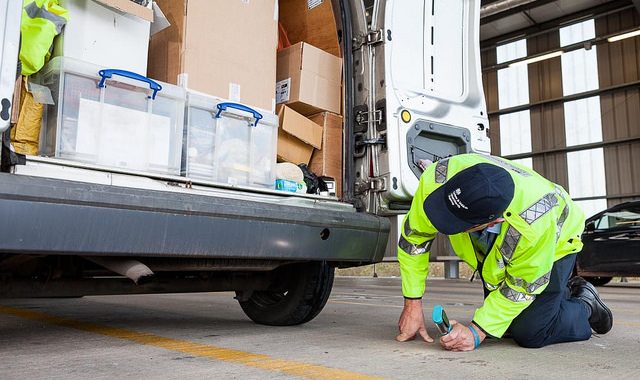
DVSA aims to stop violence against its staff

DVSA aims to stop violence against its staff

new traffic commissioner

Richard Turfitt is the new Senior Traffic Commissioner

Richard Turfitt will succeed Beverly Bell as the new Senior Traffic Commissioner

Richard Turfitt will be taking up his new role as the new Traffic Commissioner on 1 June 2017. Turfitt, previously Traffic Commissioner for the East of England, has worked as a government prosecutor for more than a decade.

Transport Minister John Hayes said, “I’m delighted that Richard will be the new Senior Traffic Commissioner , following his tenure asTraffic Commissioner for the East of England. His knowledge and vast experience means he is well-placed to regulate services appropriately, and I wish him all the best in this important role.”

Traffic Commissioner are responsible for the regulation of bus, coach and goods vehicle operators, and registration of local bus services. They exercise power to call operators to a public inquiry to examine concerns about vehicle and driver safety. They also deal with professional drivers at conduct hearings.

Biography

Richard Turfitt joined the Health and Safety Executive in 1999 and helped establish their Litigation and Enforcement Advisory team. Richard helped to found the Health and Safety Lawyers’ Association and is a serving Justice of the Peace.

Career

Richard left independent practice in 1997 to prosecute on behalf of the Departments of Social Security and Health. In 1998 he moved to the Treasury Solicitor’s Department to undertake personal injury litigation. He was also responsible for managing the representation of the Prison Service at inquests throughout England and Wales.


New Traffic Commissioner

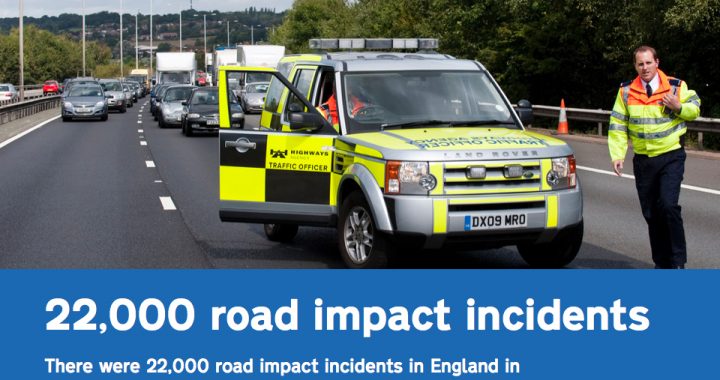
load securing guide-22000-road-impact-incidents

DVSA publishes new load securing guide for vehicle operators

DVSA publishes new load securing guide for vehicle operators. New guidance has been published by the Driver and Vehicle Standards Agency (DVSA) to help vehicle operators transport loads securely. This is a very comprehensive new guide which is easy to read and very useful. It also contains great new DVSA films posted in youtube.

The guide, developed with the transport industry, sets out important information like:

  • who’s responsible for load securing
  • the consequences of poor load securing
  • how DVSA enforces the rules on load securing

It gives practical advice about:

  • loading on different types of vehicles
  • carrying different types of loads

The guide includes videos so operators can find out things like:

  • what DVSA looks for when it stops a vehicle at the roadside
  • how different load securing systems can be used

The new load securing guide can be used by fleet operators to help meet requirement V6 Safe loading in the FORS standard which states “Fleet operators shall ensure that vehicles are safely loaded and that appropriate load restraints are used.”

To view the full article, please click here

Forward post from DVSA and their 5-year strategy

DVSA’s 5-year strategy – helping you stay safe on Britain’s roads

Forward post from DVSA and their 5-year strategy. A very interesting read, point to note relating to operators –

  • companies who prove they have excellent safety standards will see lower costs and other commercial advantages

DVSA’s purpose is to help you stay safe on Britain’s roads.

Today (Thursday 30 March 2017) we’ve published our 5-year strategy and business plan which set out a range of commitments we’ve made to improve road safety, user experience and value for money.

Our strategy explains what we’ll do between 2017 and 2022 to help you stay safe on Britain’s roads.

Our business plan sets out which parts of the strategy we’ll be taking forward in 2017 to 2018.

Read our 5-year strategy and business plan.

Revision to the Driver CPC directive

Revision to the Driver CPC directive have your say

DVSA’s revision to the Driver CPC directive is here. It’s time to have your say!

The DVSA have released a survey regarding the revision to the Driver CPC directive. Interestingly, they have already provided top line proposals for us to comment on. However, there is an opportunity to air your views and thoughts via email if you wish. This will provided to you at the end of the survey.

Top line proposals to periodic training, are to:

  • Prevent a repeat of training courses during a periodic training cycle
  • Include road safety in at least one periodic training session
  • Allow other elements of training to be included, such as disability awareness, dangerous goods transportation and animal transportation

Nothing too controversial here, yet they haven’t addressed issues concerning Driver CPC trainers and drivers alike specifically regarding timings…..read on.

Here’s my thoughts on the current proposals

  • Prevent a repeat of training courses during a periodic training cycle – This doesn’t include remedial training but suffice to say this decision is currently easily manageable by between training provider, employee and employer 
  • Include road safety in at least one periodic training session – Of course it’s a good idea but I haven’t met any provider who doesn’t already offer a H&S module/course. Plus I haven’t met any driver who wouldn’t want to have training in H&S
  • Allow other elements of training to be included, such as disability awareness, dangerous goods transportation and animal transportation – All elements related to transport should be included in the syllabus.
Timings and the 35/7 hour rule

I am surprised to see there is no mention on timings. In my opinion, the 35/7 hour rule, is a major issue and needs to be addressed. The question is, how do we ensure the drivers (and trainers) get the most out of Driver CPC and have taken in and digested the training provided?

Current thinking is to make a driver sit in class room for 7 hours and the trainer use questions, quizes and discussions to satisfy understanding. I have provided Driver CPC to delegates who have already had training in the subject matter previously taught and I can say (from experience) some drivers have only been able to demonstrate little or (in fact) no understanding of said subject matter from the previous session. This is because it is currently perfectly feasible to physically be present in a classroom, yet mentally not.

A driver can be present in the class room for 7 hours and simply choose not to engage. There’s not much a trainer can do about it. Obviously, I’d like to think non of my delegates have fallen into this bracket but I can’t say for sure. Further more, there’s no way to measure how successful Driver CPC is or even if it’s working at all.

The Solution

Have in place a multiple choice test at the end of the course, simple! This does beg the question, would drivers prefer to sit for 7 hours or take a small test at the end? Even if the drivers did opt for the 7 hours (which I doubt), this also flies in the face of current understanding of the learning method.

We take a test at the end of our GCSEs (O levels in my day!), we take a test at the end of our B class driving instruction, we take a test at the end of our Class 1/2, we take a test to become a Transport Manager. Ok you get the point, we take tests to demonstrate we have understood the information being taught.

If the only reason for not testing at the end of Driver CPC is because the perceived notion is drivers won’t like it, then this is not only a huge assumption, it’s patronising and unreasonable relative to current understanding in the learning process.

The other great advantage to having a test in place, it would eradicate rogue training providers finishing early for the day. It just wouldn’t be a problem anymore and thus ensuring drivers will receive the full training they have paid for and deserve.

There are details like, management process, what happens if a driver doesn’t pass etc. However, these are just detail which are easily worked out. In case you’re wondering, I do have the complete solution but for reasons of blog interest and general interest I shall keep this post to the point.

Now is the time to look at how Driver CPC works in more detail and the opportunity to use logic to make DCPC more workable. Have your say in the Driver CPC directive review NOW.

How do I have my say?

Go here to complete the Driver CPC directive survey.

If you need any advice regarding Driver CPC training or would like to become an Driver CPC Affiliate Consortium Member, then just get in touch. We’re here to share the knowledge!

the_office_of_the_traffic_commisioner

Updated guidance from the Traffic Commissioners office

Forward posts with updated guidance from the Traffic Commissioners office.

Following consultation with stakeholders and industry, the Senior Traffic Commissioner’s statutory documents have been updated. The revised documents, which are available online, explain the legal basis and the way traffic commissioners approach the exercise of their statutory functions.

Detailed information on legislation for goods and passenger carrying vehicles is provided in the guidance, as well as other relevant legislation and case law. The revised guidance details a range of topics including; good repute and fitness, finance, transport managers and operating centres.

A short summary of the main changes can be read below.

Good repute or fitness

This guidance sets out the requirements for satisfying good repute or fitness. The update gives better guidance on what’s relevant to your repute or fitness as an operator, and who is fit to fulfil conditions and undertakings on your licence. It also includes guidance on the approach licensing and compliance staff should take when acting on behalf of individual traffic commissioners, to determine good repute and fitness.

Financial Standing

On 1 January 2017, revised financial standing requirements will come into force for standard national and international operator licences.

Standard operator licence
VehiclesPrevious ratesRate from 1 January 2017
First vehicle£6,650£7,850
Additional vehicles£3,700£4,350

The rates are calculated each year against the Euro exchange rate as required under EU Regulation 1071/2009.

In recent years, the amount of money for standard licence holders has reduced. The levels are increasing because of a change in the exchange rate.

Restricted operator licence

There will be no change to the finance which must be available to support restricted licence applications and licences.

VehiclesRate
First vehicle£3,100
Additional vehicles£1,700
Driver conduct

This guidance covers vocational driver conduct matters that are referred to traffic commissioners by the Secretary of State for Transport (through DVLA). The update provides more detailed guidance and contains a number of case studies, which you can use to train and educate drivers.

Decision making

This document explains how commissioners make their decisions, including calling operators to public inquiry. Changes to the document will lead to less serious cases being taken out of public inquiry listings. This is so that the commissioners’ tribunal resources can be targeted at the most seriously non-compliant operators, transport managers and drivers.

Delegations to staff

This publication sets out matters that traffic commissioners routinely delegate to staff acting on their behalf and deputy traffic commissioners. The updates include information that allows traffic commissioner staff to make more decisions on behalf of traffic commissioners.

If you’d like to learn more you can view all the revised documents here.


DVSA-logo-tmconsultant.co.uk

Apply & manage your vehicle operator licence online!

So the office of the Traffic Commissioner and the DVSA has finally caught up with the 21 century and it is now possible to apply & manage your vehicle operator licence online!

For the first time, online applications for vehicle operator licences can now use the shiny new online system, replacing the Operator Self Service System.

Mr Kevin Rooney, Traffic Commissioner for the west of England and for the northeast of England stated that “We wanted to change the system because we recognise that the old system isn’t very user friendly, we want to encourage operators to do things digitally and to transact digitally both with government and with us”.

Main addition

The main addition to the new system is a service allowing new operators to apply for a licence online. Existing licences can still manage their licence by adding more vehicles, applying to increase vehicle limits and adding a transport manager, so no change there. Existing users of the Operator Self-Service System can log in to the new service using the same username and password. For more information, and to access the new service, visit the .gov website. To apply go here.

If you would like more information about Managing your Operator Licence, or our Operator Licencing, services, please don’t hesitate to get in touch. Here to share the knowledge!
Since the launch of the Manage Your Operator Licence, I have written a new updated post. You can view that post here.

DVSA-logo-tmconsultant.co.uk

Killer drivers to face life sentences

Forward post from the DVSA.

Dangerous drivers who kill are set to face life sentences, under plans put forward by ministers.
Dangerous drivers who cause death by reckless driving, speeding, street racing or distracted by using a mobile phone could now be treated in a similar way to those charged with manslaughter.

This also applies to people under the influence of alcohol or drugs.

Give your views

The Ministry of Justice wants your views on whether the current maximum penalties should be increased. Give your views by 1 February 2017.

Other proposals include:

  • creating a new offence of causing serious injury by careless driving with a maximum sentence of 3 years
  • increasing minimum driving bans of those convicted of causing death

In 2015, 122 people were sentenced for causing death by dangerous driving with a further 21 convicted of causing death while under the influence. While the UK has one of the best road safety records in the world, deaths and injuries still cause devastation to victims and their families.